
AAS
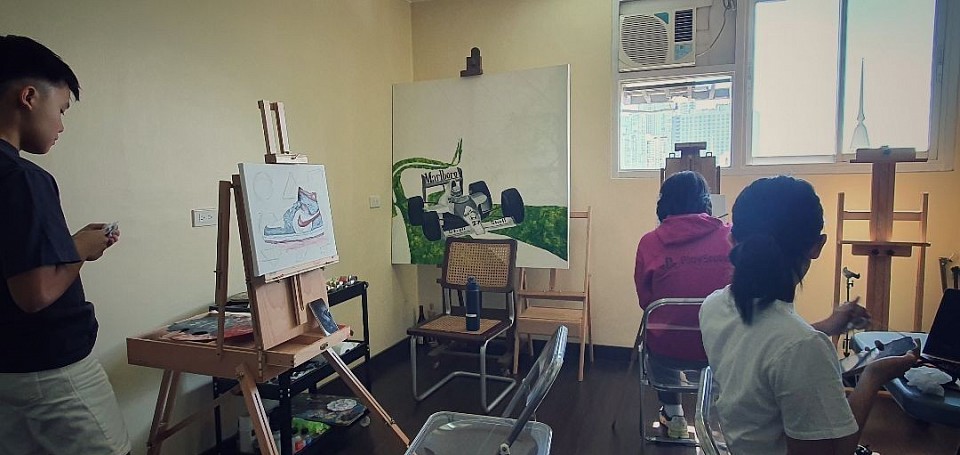
Saturday afternoon class.
Andelino Art Studio is built on the belief that art develops through attention, patience, and sustained practice.
Rather than treating art as a short course or a set of quick techniques, the studio approaches learning as a gradual process where students develop their artistic voice through observation, experimentation, and reflection.
Guided by the mentorship of Jheng Marzan, the studio functions much like a traditional atelier. a place where students work closely with an experienced artist while developing their own ideas and methods.
Students are not simply taught how to produce finished artworks.
They are guided to understand how ideas form, how materials behave, and how artistic decisions evolve over time.
A Studio Environment for Serious Practice
The studio environment at Andelino is intentionally small and focused.
This allows each student to receive careful guidance while working at their own pace. Rather than rushing through projects, students are encouraged to spend time exploring their ideas, testing materials, and reflecting on their progress.
Within the studio, students often work quietly alongside one another, each engaged in their own creative investigations. Conversations happen naturally around artworks, sketches, and materials.
This shared environment allows students to learn not only from their mentor but also from observing the processes and discoveries of others.
Over time, the studio becomes a space where curiosity, patience, and experimentation are part of everyday practice.
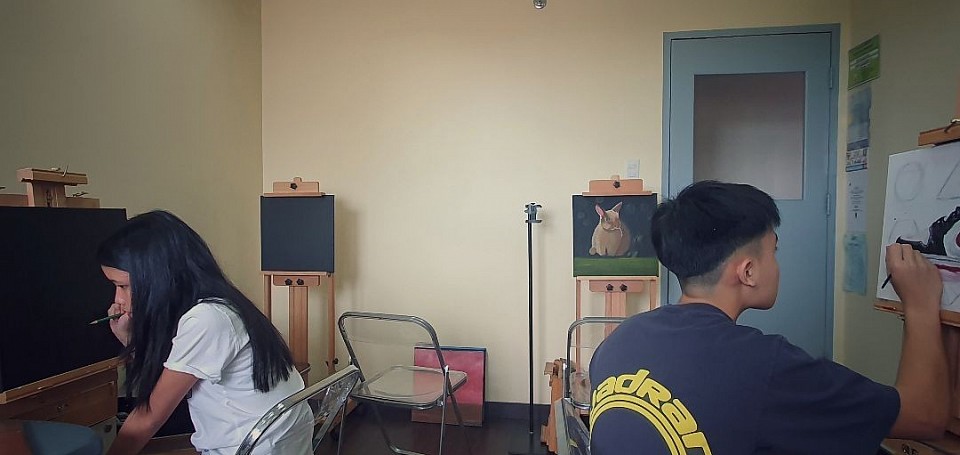
Alexi, grade 12, ISM. Nick, ateneo. Siblings working on their paintings.
Foundations First
At the heart of the studio is a simple set of principles that guide how students approach their work.
Process before perfection
Students are encouraged to explore ideas through sketches, studies, and experiments before arriving at finished pieces.
Attention before speed
Careful observation and thoughtful decision-making are valued more than producing work quickly.
Experimentation before comfort
Students are invited to try unfamiliar materials, techniques, and ideas in order to expand their creative possibilities.
Craft before style
Technical understanding of materials and methods supports the development of each student’s individual artistic voice.
These principles encourage students to see art as a process of inquiry and discovery, rather than simply the production of finished works.
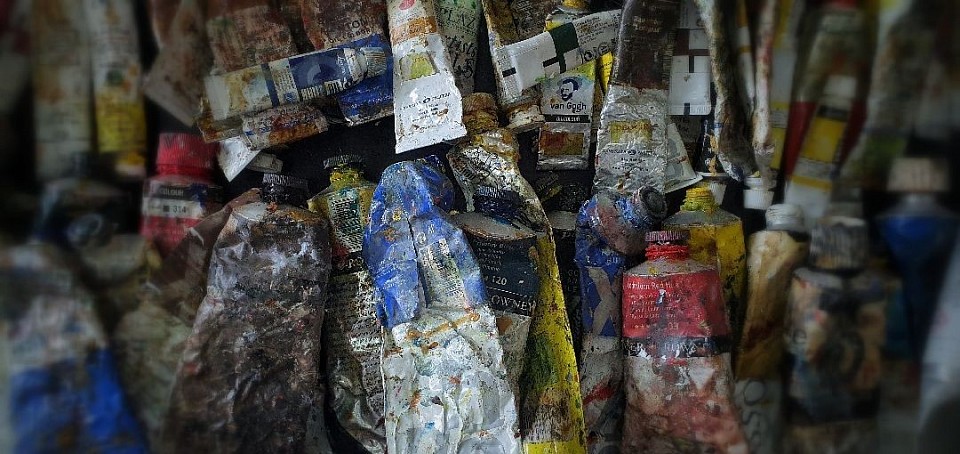
Oil paints
Learning Through Exploration
In the studio, experimentation plays an important role in artistic development.
Students often begin with simple studies, drawing objects, observing textures, or testing different materials. These exercises help them understand how visual ideas emerge through practice.
As students gain confidence, they begin to develop more personal projects that combine technique with conceptual thinking.
Sketchbooks become places where ideas are recorded, tested, and refined. Mistakes are seen as part of the learning process, offering new directions and insights.
Over time, students begin to recognize patterns in their work, themes, visual interests, and questions that lead them toward a more defined artistic voice.
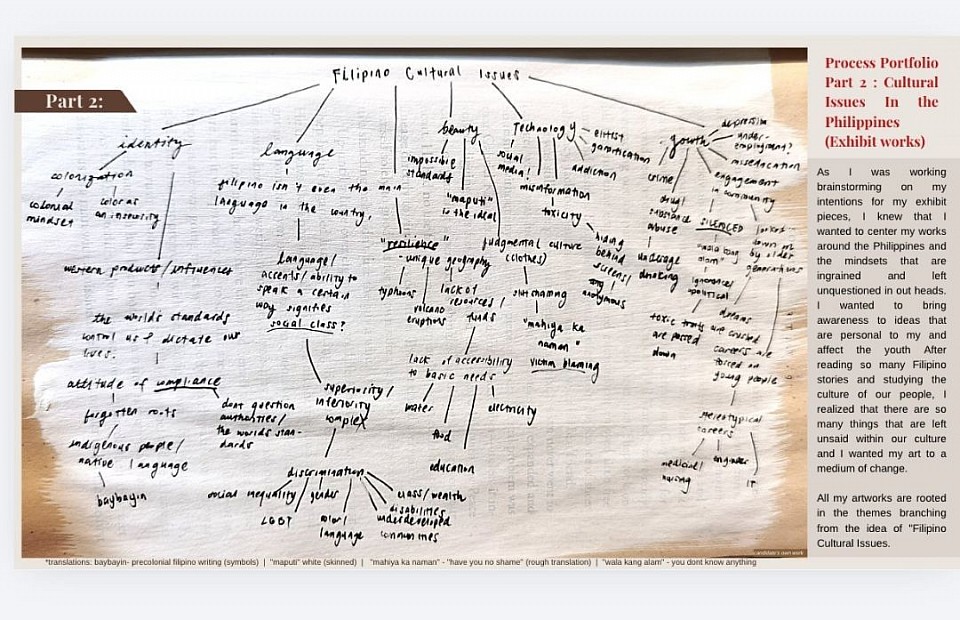
kaz, grade 11 mind map
Supporting IB Visual Arts Students
Many students at Andelino are enrolled in International Baccalaureate Visual Arts (SL and HL) programs in their respective schools.
The studio provides an environment where these students can deepen their exploration beyond the classroom.
Here they are encouraged to:
experiment with a variety of materials and techniques
develop ideas through sketchbooks and visual research
reflect critically on their artistic process
refine artworks for their IB portfolios and exhibitions
Because IB Visual Arts emphasizes both experimentation and reflection, the atelier environment allows students to engage with their projects more thoughtfully and at a pace that supports genuine creative growth.
A Place to Grow as an Artist
The purpose of the atelier is not only to help students complete projects or build portfolios.
It is to help them develop habits of attention, discipline, and creative independence that will remain with them long after they leave the studio.
Through steady guidance and consistent practice, students gradually learn how to trust their observations, question their ideas, and shape their work with greater confidence.
For many students, the studio becomes an important part of their artistic journey, a place where curiosity is welcomed and where the process of learning remains open and ongoing.
