
Built on Trust, One Family at a Time
From the Studio
A portrait of Andelino L. Marzan Jr. and the philosophy of his practice
The Silent Maestro: Inside the Intentional Mentorship of Jheng Marzan
MANILA — In a contemporary art scene frequently obsessed with viral marketability and rapid output, the quiet hum of Andelino "Jheng" Marzan Jr.’s studio offers a refreshing, radical alternative. Marzan is not merely running an art school; he is preserving a lineage. Observing him move among his students reveals a masterclass in patient, individualized pedagogy that prioritizes foundational discipline over instant gratification.
Marzan’s brilliance as an educator lies in his ability to demystify the intimidating mechanics of classical realism. Where lesser instructors rely on vague, poetic encouragement, Marzan diagnoses a canvas with surgical precision. Watching him guide a young painter through the complexities of chiaroscuro is illuminating. He does not impose his own stylistic hand; instead, he teaches the eye to see the subtle, shifting physics of light and shadow. Under his watch, student pieces evolve from flat imitations into dimensional, breathing compositions.
From Private Doorsteps to a Dedicated Sanctuary
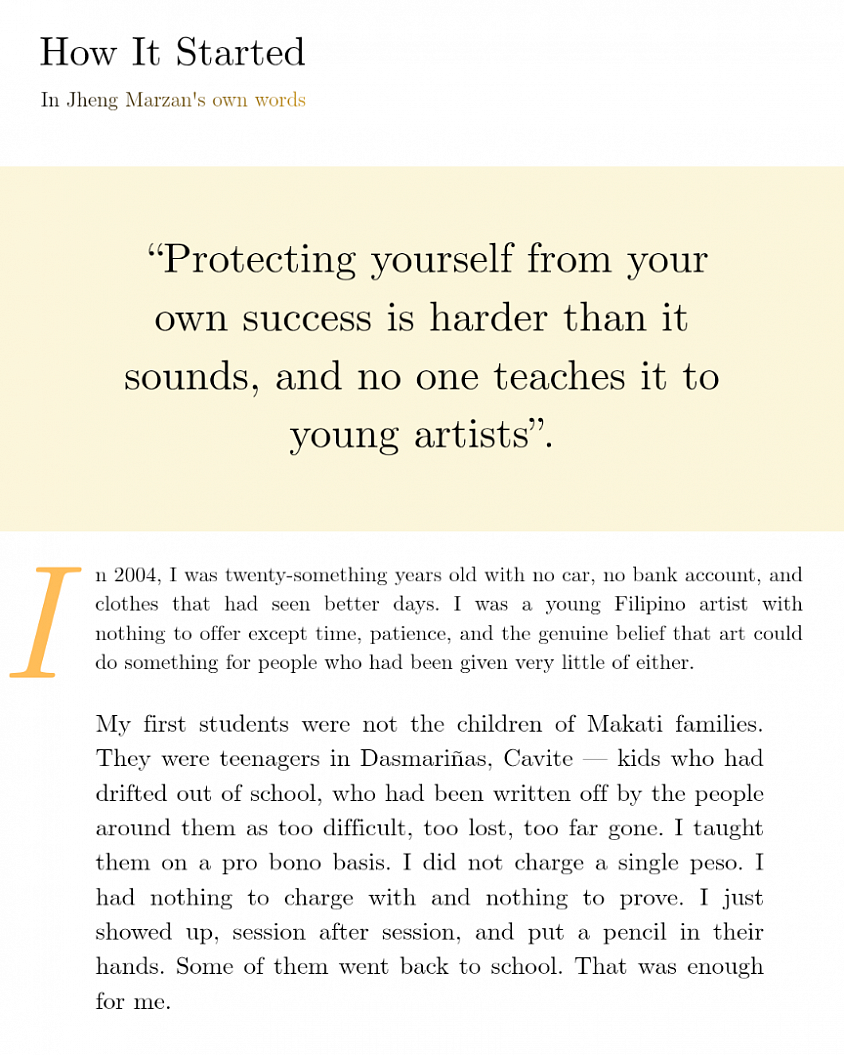
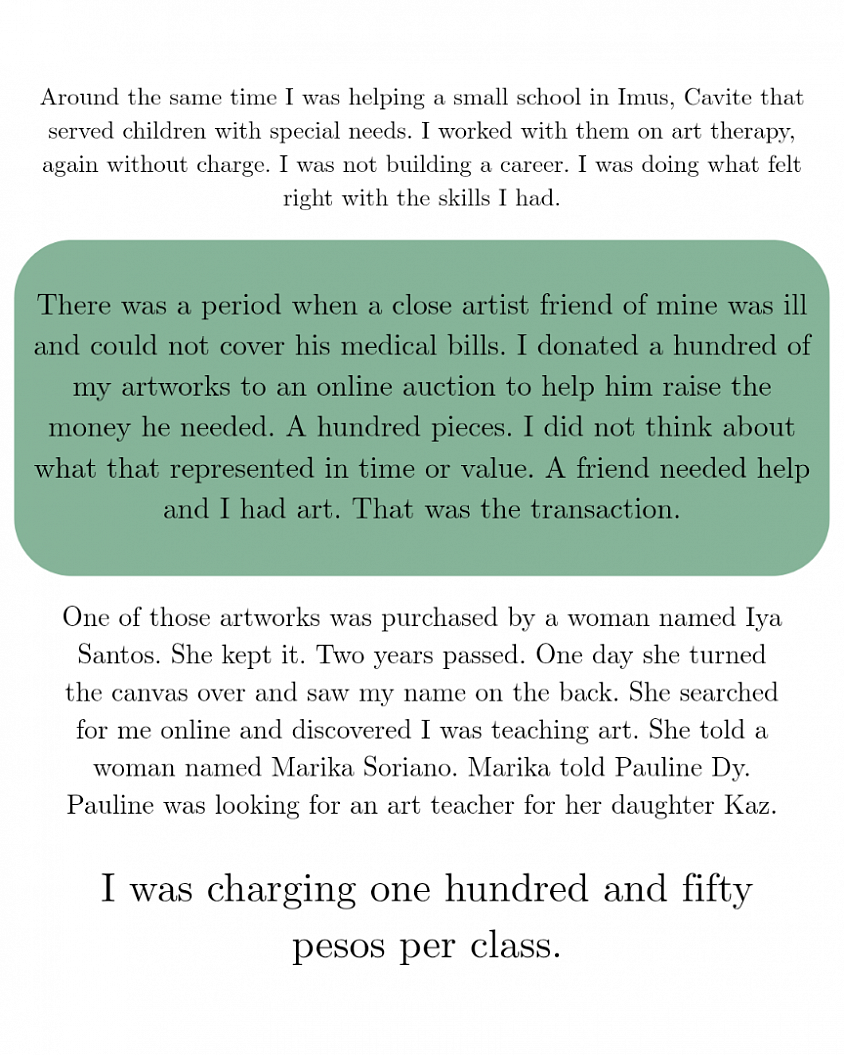
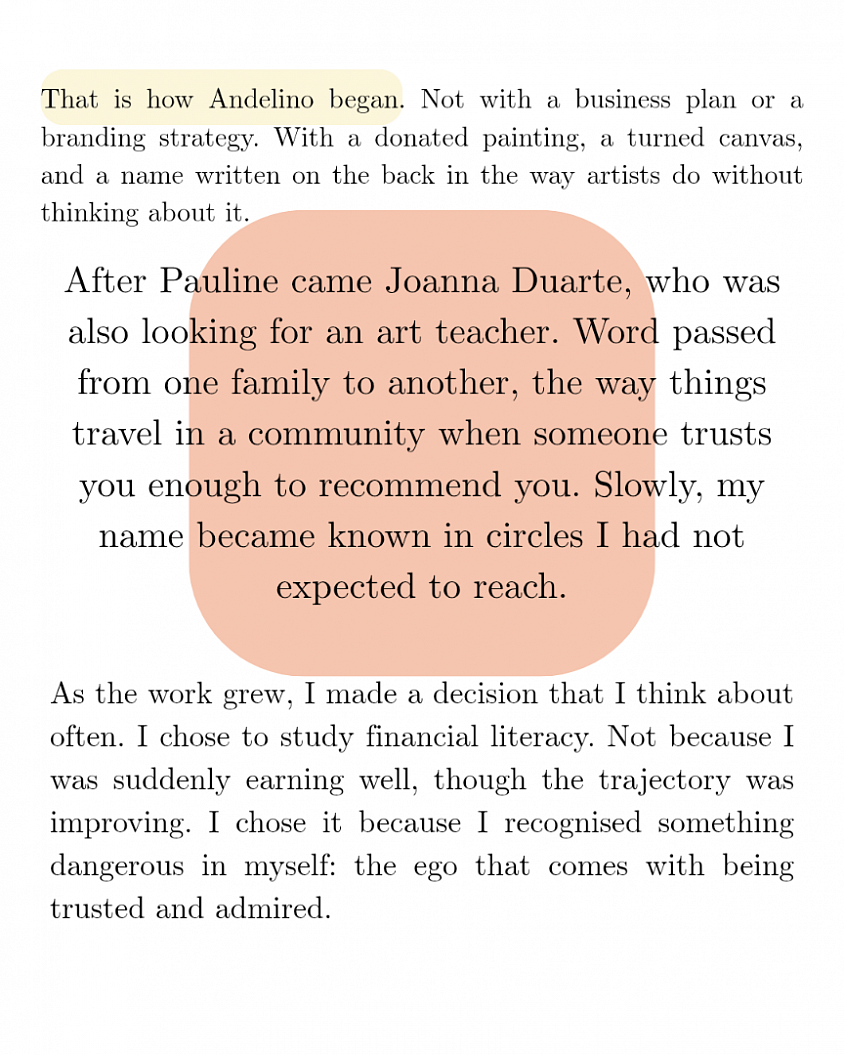
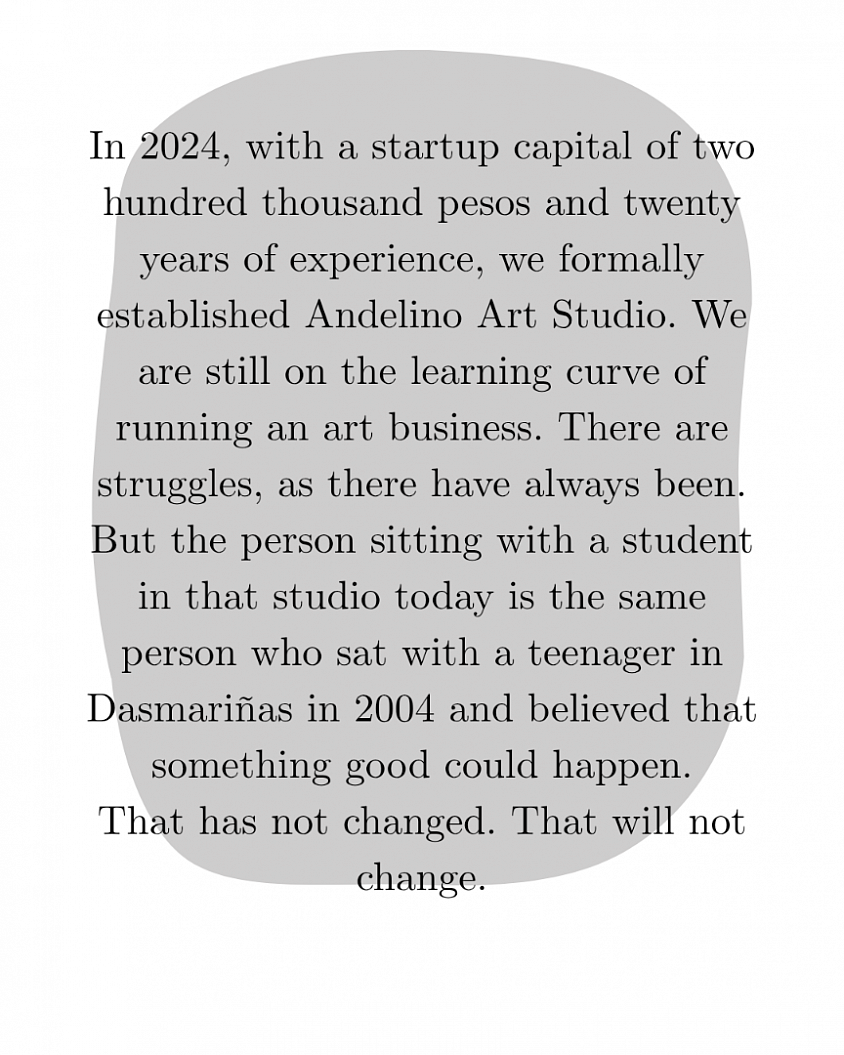
The methodology practiced today at Andelino Art Studio in Makati is the product of over two decades of quiet refinement. Long before establishing a dedicated institutional space, Marzan operated purely on word-of-mouth reputation. He traveled directly to students' homes as a private tutor, meticulously coaching young minds through basic observation, drawing, and color mechanics.
This slow-cooked, ancestral approach to teaching built a tight-knit community of trusting families. As generations of students matured under his guidance, that collective trust naturally forced the expansion of his home-based practice into a standalone, specialized studio. Today, his classroom acts less like a business and more like an active laboratory for creative critical thinking.
The Architecture of the Critique
What sets Marzan apart from traditional academic institutionalists is his rejection of the "one-size-fits-all" curriculum. He treats each easel as a unique cognitive space. On any given day, he can be seen pushing advanced International Baccalaureate (IB) students toward daring anatomical risks or complex visual thematic mapping, only to turn around and gently anchor a complete beginner in the laws of grisaille undertones.
There is no ego in his critique only structural clarity. He actively discourages the hollow pursuit of visual trends, emphasizing to his pupils that they are not merely painting an object, but mapping "presence and patience" onto the canvas. His curriculum demands that a student fully comprehend why they choose to create a stroke before they are allowed to master how to execute it.
A Bedrock for Emerging Talent
For more than twenty years, Marzan has quietly shaped the bedrock of emerging Filipino artistic talent. His enduring legacy is not measured by explosive social media metrics, but by the generational continuity of his studio, where older siblings routinely pass down their easels to younger brothers and sisters.
In an era dominated by fleeting digital aesthetics, Marzan’s classroom remains a vital, unhurried sanctuary for rigorous craftsmanship. He is not just teaching students how to handle a paintbrush; he is equipping them with the technical vocabulary and cognitive stamina required to accurately voice their own interior worlds.
Among the students who have come through the Atelier, a significant number have gone on to achieve outstanding results in the IB Visual Arts programme at Manila's leading international schools. This is not incidental. The classical method Andelino practises, the emphasis on observation, on understanding before technique, on sustained development over years is precisely what IB examiners are trained to reward. A student who has worked seriously at Andelino for three or four years arrives at their IB submission with something most of their peers do not have: a genuine body of work, and the vocabulary to speak about it with authority.
On Discipline Before Talent
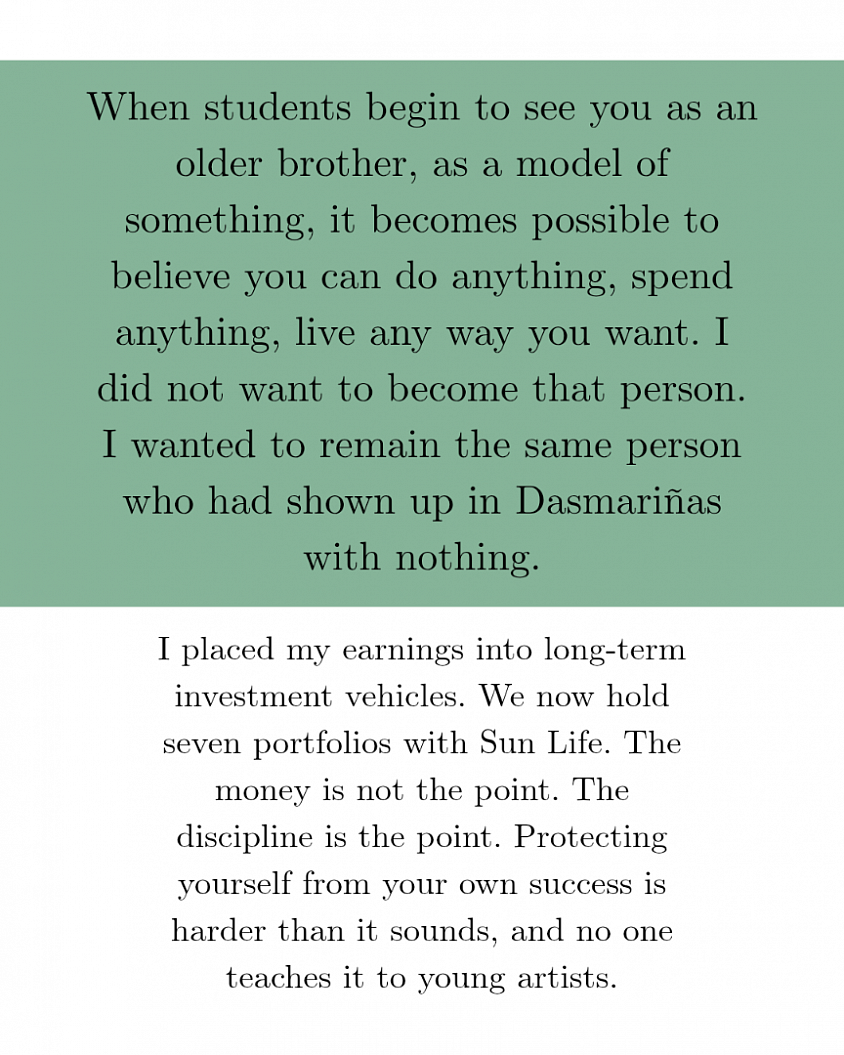
Talent gets noticed. Discipline is what actually builds a portfolio.
In twenty years of teaching, I've seen naturally gifted students plateau, and I've seen average students outgrow their own expectations — the difference was never raw ability. It was showing up. It was returning to the same painting for the fifth time, the tenth time, until it was actually right, not just finished.
This is why Andelino Atelier keeps cohorts small. Real mentorship isn't about managing a room of talented students — it's about knowing exactly where each one needs to be pushed, and where they need patience instead. That only works at a certain scale.
I'd rather teach four students everything I know than teach twenty students less than they deserve.
— Teacher Jheng